Oklahoma Insurance
Statewide Standards | Coverage Requirements | Local Risk Conditions
“Every Oklahoma insurance decision must be grounded in statute, claim behavior, and the realities of local risk exposure.” — Micah Belyeu
“Statewide clarity protects families, businesses, and property owners from preventable coverage gaps.” — Micah Belyeu
Oklahoma Insurance Overview
This page establishes the statewide foundation for all insurance lines in Oklahoma. It defines the legal requirements, coverage structures, and risk conditions that shape how policies are written, priced, and settled across the state.
This is the parent page for all Oklahoma insurance categories, all city pages, and all statewide educational resources.
Oklahoma Auto Insurance
Oklahoma auto insurance is defined by state‑mandated liability requirements, carrier underwriting rules, and regional crash and weather patterns that differ between metro and rural areas.
Oklahoma auto insurance is built on state‑mandated liability, carrier‑specific underwriting rules, and regional crash and weather patterns that vary between metro and rural areas. The full statewide auto‑insurance explanation lives on the dedicated Oklahoma Auto Insurance page.
Oklahoma Home Insurance
Home insurance in Oklahoma is shaped by severe weather exposure, hail frequency, roof age considerations, and construction‑type underwriting. Carriers evaluate risk differently across Tulsa, Oklahoma City, and rural counties.
A full statewide breakdown lives on the Oklahoma Home Insurance page.
Oklahoma Renters Insurance
Renters insurance protects personal property and provides liability coverage for tenants across Oklahoma. Risk varies by building type, location, and theft patterns in metro areas.
A full statewide explanation lives on the Oklahoma Renters Insurance page.
Oklahoma Commercial Insurance
Commercial insurance requirements depend on business type, operations, employee count, and industry‑specific exposures. Oklahoma businesses face unique risks tied to weather, transportation corridors, and regional economic patterns.
A full statewide breakdown lives on the Oklahoma Commercial Insurance page.
Oklahoma Risk Conditions
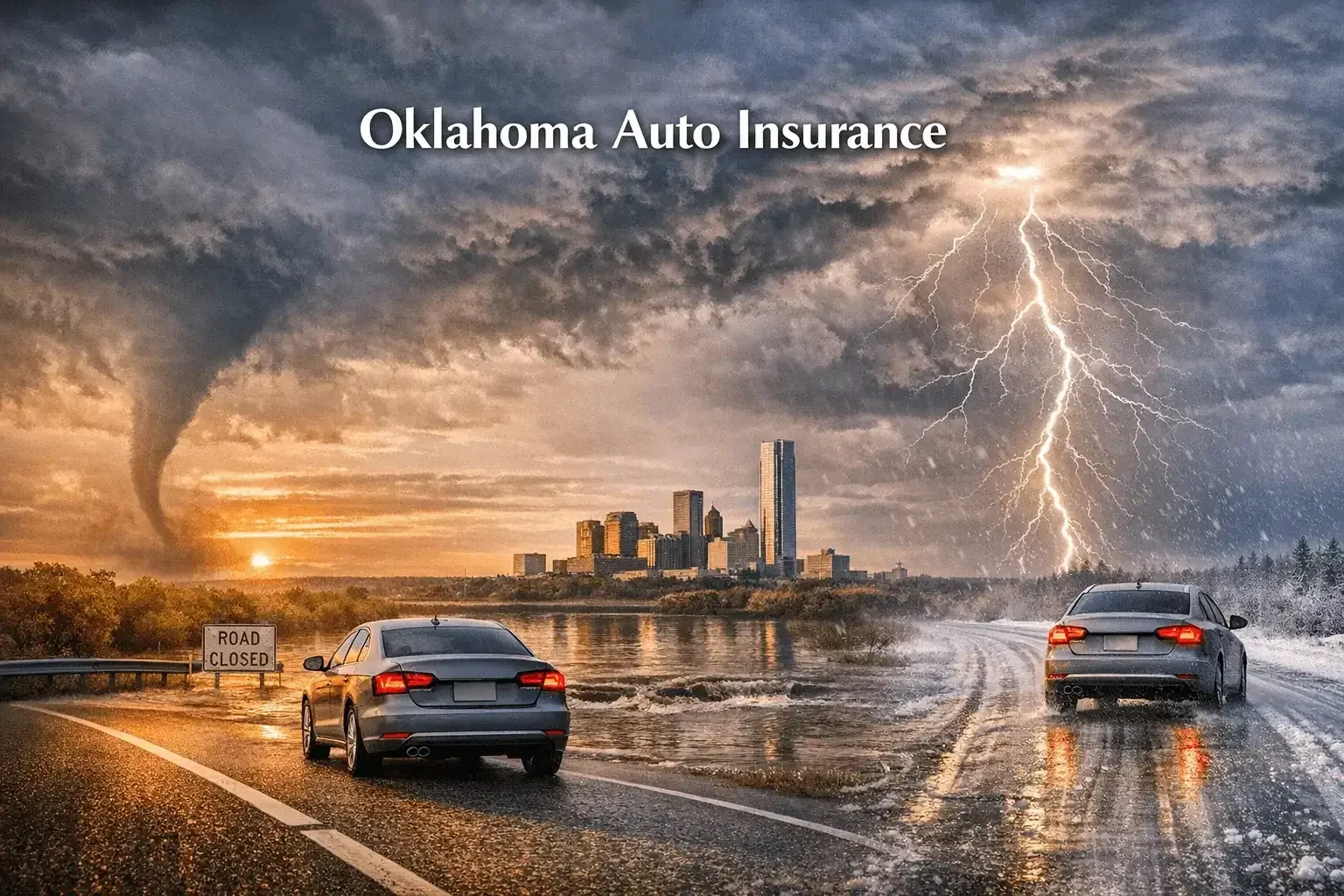
Insurance outcomes in Oklahoma are shaped by Oklahoma Risk Conditions:
Urban vs. rural crash distribution
Uninsured‑driver concentration
Theft patterns in metro areas
Severe weather clusters
Hail | Wind | Tornado | Flood
Wildlife‑strike corridors
Roof‑age underwriting rules
Construction‑type cost variability
Oklahoma Cities We Serve
Storms Anchor provides city‑specific insurance clarity across Oklahoma, with each page explaining local risk conditions and coverage expectations.

Statewide Educational Resources
These statewide educational pages explain how Oklahoma coverage types, claim behavior, and risk conditions work across the state.:
Oklahoma Liability Coverage
Oklahoma Full Coverage
Oklahoma UM/UIM Coverage
Oklahoma Comprehensive Coverage
Oklahoma Collision Coverage
Oklahoma Weather‑Related Claim Conditions
Oklahoma Uninsured‑Driver Risk
If you want help understanding how Oklahoma’s insurance rules apply to your situation, we can walk through it together with no pressure and no sales language.
Oklahoma Insurance FAQ
The following statewide FAQ provides clear, neutral answers to the most common Oklahoma insurance questions.
Oklahoma Statewide Basic Insurance FAQ:
What does this Oklahoma insurance page actually help me do?
Friend-to-friend: This page is your big picture map for Oklahoma insurance. Instead of dropping you straight into auto, home, or some quote form, it shows you how the laws, carrier rules, and local risks all fit together. Once you understand that, every other decision—limits, deductibles, and even which carrier you pick—starts making a lot more sense.
Authority answer: This page provides a statewide framework for understanding Oklahoma insurance by explaining how statutory requirements, carrier underwriting standards, and local risk conditions interact. Its purpose is to give Oklahoma residents a clear, non‑sales, educational foundation so they can interpret policy language, coverage options, and claim outcomes in a way that is consistent with Oklahoma law, carrier filings, and regulator expectations.
How is Oklahoma insurance different from other states?
Friend-to-friend: Oklahoma feels different because we live with tornadoes, hail, wind, and uninsured drivers more than a lot of places. The rules on paper might look similar to other states, but the real‑world risk and how claims play out can be very different. That’s why you’ll see so much focus here on weather, crash patterns, and local risk conditions.
Authority answer: Oklahoma insurance is shaped by state‑specific statutes, regulatory guidance, and regional risk patterns, including severe weather exposure, hail and wind frequency, uninsured‑driver rates, and urban‑versus‑rural crash distribution. While many coverage concepts are similar across states, the combination of Oklahoma law, carrier filings, and local risk data produces distinct underwriting, pricing, and claim‑handling outcomes that must be evaluated within the Oklahoma regulatory and risk environment.
Why does this page talk about “statewide standards” instead of just selling me a policy?
Friend-to-friend: Because you shouldn’t have to buy something just to understand how it works. This page is built to teach first, sell later—or not at all. Once you understand the rules of the game in Oklahoma, you can decide if you want help, a quote, or just better questions to ask whoever you already work with.
Authority answer: This page is intentionally structured as a statewide educational resource, not a sales page. Its role is to explain Oklahoma’s legal requirements, coverage structures, and risk conditions in a neutral, regulator‑safe way. Any decision to request a quote or change coverage should follow from informed understanding, not from pressure, urgency, or promotional language, in alignment with consumer‑protection expectations and best practices.
How do statewide rules connect to my specific city or neighborhood?
Friend-to-friend: Think of the statewide rules as the rulebook, and your city as the field you’re playing on. The rulebook doesn’t change from Tulsa to Norman, but the field conditions do—traffic, crime, weather patterns, and even roof ages. This page gives you the rulebook and then points you to city pages that show how those rules play out where you live.
Authority answer: Oklahoma’s insurance statutes and regulatory standards apply statewide, but risk conditions and underwriting outcomes vary by city and region. Factors such as traffic density, theft patterns, weather severity, construction types, and historical loss data influence how carriers apply statewide rules at the local level. This page establishes the statewide framework and then routes users to city‑specific pages that contextualize those rules for particular communities.
Is this page giving me legal or tax advice?
Friend-to-friend: No. This page is here to explain, not to act like your lawyer or tax pro. It can help you understand the language and logic of insurance in Oklahoma, but anything that sounds like a legal or tax decision is something you should confirm with a licensed professional in that field.
Authority answer: No. The information on this page is general educational content about Oklahoma insurance and is not legal, tax, or financial advice. Coverage decisions, contract interpretation, and any legal or tax implications should be reviewed with a licensed attorney, tax professional, or other qualified advisor. Policyholders should also consult their insurance carrier, agent, or broker for guidance specific to their own policies and circumstances.
Oklahoma Statewide Auto Insurance FAQ:
What auto insurance does Oklahoma law actually require?
Friend-to-friend: At a minimum, Oklahoma expects you to carry liability coverage—the part that helps pay for injuries or damage you cause to others in a covered accident. The legal minimums are starting points, not recommendations. Most families choose higher limits once they see how quickly medical bills and vehicle costs can add up.
Authority answer: Oklahoma law requires drivers to maintain minimum liability coverage as defined by state statute. These minimum limits are designed to satisfy financial‑responsibility requirements, not to guarantee full protection in every loss scenario. Many policyholders elect to carry higher liability limits and additional coverages (such as uninsured/underinsured motorist, comprehensive, and collision) to better align protection with their assets, risk tolerance, and driving environment. For exact current minimums, policyholders should refer to Oklahoma statutes and official state resources.
Why is uninsured‑driver risk such a big deal in Oklahoma?
Friend-to-friend: Because there are more people driving without enough insurance than most of us realize. When someone with little or no coverage hits you, your own policy may have to do the heavy lifting. That’s why UM/UIM coverage is such a big topic in Oklahoma—it’s one of the main tools you have to protect yourself from other people’s decisions.
Authority answer: Oklahoma has historically experienced meaningful levels of uninsured and underinsured drivers, which can significantly affect claim outcomes when at‑fault parties lack sufficient coverage. Uninsured/Underinsured Motorist (UM/UIM) coverage is a key mechanism for addressing this exposure, subject to policy terms, limits, and state law. Evaluating UM/UIM options in Oklahoma requires careful consideration of local crash patterns, liability limits in the market, and household risk tolerance, in consultation with a licensed insurance professional.
How do weather and hail storms affect my auto insurance in Oklahoma?
Friend-to-friend: In Oklahoma, hail and storms are just part of life, and carriers know it. If you want your car protected from hail, tornado debris, flood, or theft, that usually falls under comprehensive coverage, not basic liability. The weather doesn’t care what you picked—so it’s worth making sure your coverage matches the real risks you drive through.
Authority answer: Severe weather, including hail, wind, tornado activity, and flooding, is a significant factor in Oklahoma auto‑insurance underwriting and pricing. Damage from these events is typically addressed, when covered, under comprehensive coverage, subject to deductibles, exclusions, and policy terms. Carriers incorporate regional weather patterns and historical loss data into their rating and underwriting decisions, which can influence premiums and coverage availability across different parts of Oklahoma.
Why are my auto rates different from someone in another Oklahoma city?
Friend-to-friend: You and a friend might both live in Oklahoma, but your driving worlds can be very different. One city might have more traffic, more theft, or more severe weather claims than another. Carriers price based on patterns, not just one person—so your ZIP code, garaging location, and local claim history all matter.
Authority answer: Auto‑insurance premiums in Oklahoma vary by location because carriers evaluate territorial risk factors, including crash frequency, theft rates, litigation patterns, weather exposure, and historical loss experience. Even within the same state, different cities and regions can present materially different risk profiles, which are reflected in rating territories and underwriting guidelines filed with regulators. As a result, two drivers with similar profiles may see different premiums based on where their vehicles are garaged and operated.
Do I really need “full coverage” on an older vehicle in Oklahoma?
Friend-to-friend: “Full coverage” is a phrase people use, but it’s not a legal term. On an older car, the real question is: If this car were totaled tomorrow, would it hurt you more to lose the car or to keep paying for physical‑damage coverage? Sometimes it makes sense to keep it; sometimes it doesn’t. That decision should be made on purpose, not by default.
Authority answer: The decision to maintain comprehensive and collision coverage on an older vehicle in Oklahoma depends on factors such as vehicle value, household finances, loan or lease requirements, and risk tolerance. There is no universal rule that coverage should automatically be dropped at a certain age or mileage. Policyholders should evaluate whether the potential payout after deductibles justifies the ongoing premium and should make changes only after reviewing policy terms, lender requirements, and their own financial situation with a licensed insurance professional.
Oklahoma Statewide Home Insurance FAQ:
Why is my roof such a big deal to home insurers in Oklahoma?
Friend-to-friend: In Oklahoma, your roof is the front line against hail and wind. Carriers care about age, material, and condition because that’s where a lot of big claims start. An older or worn roof doesn’t automatically mean you’re uninsurable, but it can change pricing, deductibles, or how a claim is settled.
Authority answer: Roof characteristics—such as age, material, condition, and prior repairs—are critical underwriting factors in Oklahoma due to the state’s hail and wind exposure. Carriers may adjust eligibility, premiums, deductibles, and loss‑settlement terms based on roof risk, consistent with their filed guidelines and regulatory requirements. Policyholders should review how their roof is classified and how actual cash value (ACV) versus replacement cost may apply in the event of a covered loss.
How do hail and wind claims typically work on Oklahoma homes?
Friend-to-friend: When a big storm hits, the process usually starts with documenting damage, filing a claim, and having an adjuster inspect. Your deductible, roof coverage type, and policy language all matter. Two neighbors can have very different outcomes because their policies and roof situations are different, even if the same storm hit both houses.
Authority answer: Hail and wind claims on Oklahoma homes are handled according to policy terms, deductibles, and loss‑settlement provisions, which may differ between carriers and policies. Factors such as roof age, coverage type (replacement cost vs. ACV), cosmetic‑damage exclusions, and wind/hail deductibles can materially affect claim payments. Policyholders should review their declarations page and policy forms and may wish to discuss storm‑related coverage with a licensed insurance professional before a loss occurs.
Why are home insurance premiums rising even if I haven’t filed a claim?
Friend-to-friend: You can be doing everything “right” and still see your premium go up. That’s usually because carriers are reacting to bigger patterns—storm costs, construction prices, reinsurance costs, and overall claim trends in your area. Your policy lives inside that bigger Oklahoma risk picture, not in a vacuum.
Authority answer: Home‑insurance premiums in Oklahoma can increase even for claim‑free policyholders due to broader risk and cost trends, including severe‑weather losses, inflation in construction and labor costs, reinsurance pricing, and updated catastrophe modeling. Carriers adjust rates at the portfolio and territorial level, subject to regulatory review, to keep pricing aligned with expected future losses and expenses. Individual claim history is only one of many factors influencing premium changes.
Do I need separate flood insurance in Oklahoma?
Friend-to-friend: Standard home policies usually do not cover flood from rising water. If water comes in from the ground up—like a creek, river, or heavy surface water—that’s typically a flood policy issue, not a standard home claim. Whether you “need” it depends on where you live, how water moves around your property, and your risk tolerance.
Authority answer: Most standard homeowners policies exclude flood, which is generally defined as surface water, overflow of a body of water, or water that covers normally dry land, subject to policy definitions. In Oklahoma, flood coverage is typically obtained through the National Flood Insurance Program (NFIP) or private flood insurers. The need for flood insurance depends on flood‑zone designation, property elevation, drainage patterns, and financial risk tolerance, and should be evaluated with a licensed insurance professional.
How do I know if my home is insured for the right amount in Oklahoma?
Friend-to-friend: The goal isn’t to match your market value, it’s to match what it would cost to rebuild your home if something major happened. Construction costs, materials, and labor in Oklahoma can change over time. It’s worth checking that your dwelling limit and any inflation‑guard features still make sense for today’s rebuild costs, not last decade’s.
Authority answer: Adequate homeowners coverage in Oklahoma is typically based on estimated replacement cost, not market value. Carriers often use replacement‑cost estimators that factor in square footage, construction type, materials, labor costs, and local building codes. Policyholders should periodically review their Coverage A (dwelling) limit, endorsements, and inflation‑protection features with a licensed insurance professional to help ensure that limits remain aligned with current rebuild cost estimates, recognizing that no estimate can guarantee full replacement in every scenario.
Oklahoma Statewide Renter’s Insurance FAQ:
If I rent in Oklahoma, do I really need renters insurance?
Friend-to-friend: If you added up your clothes, furniture, electronics, and daily essentials, you’d probably be surprised how much it would cost to replace them all at once. Renters insurance is often the most affordable way to protect your stuff and your personal liability if something goes wrong in your unit or someone gets hurt.
Authority answer: Renters insurance in Oklahoma provides personal‑property coverage and personal‑liability protection, subject to policy limits, deductibles, and exclusions. While it is not mandated by state law, many landlords require it by lease agreement, and it can be an important tool for managing property and liability risk for tenants. The decision to purchase renters insurance should be based on the value of personal property, liability exposure, and lease requirements, reviewed with a licensed insurance professional.
Does my landlord’s insurance cover my belongings in Oklahoma?
Friend-to-friend: Almost always, no. Your landlord’s policy is usually there to protect the building, not your personal stuff. If there’s a fire, burst pipe, or other covered loss, your landlord’s coverage doesn’t automatically replace your clothes, furniture, or electronics—that’s what your own renters policy is for.
Authority answer: A landlord’s property policy typically insures the building structure and the landlord’s insurable interest, not the tenant’s personal belongings. In Oklahoma, tenants generally need their own renters insurance to obtain coverage for personal property and personal liability, subject to policy terms. Lease agreements may specify insurance expectations, and tenants should review both the lease and any renters policy with a licensed insurance professional.
What kind of liability protection does renters insurance give me in Oklahoma?
Friend-to-friend: Think of renters liability as “if something happens and they say it’s your fault” coverage. If someone gets hurt in your place or you accidentally cause damage to someone else’s property, liability coverage can help with legal defense and certain damages, up to your limits, if it’s a covered situation.
Authority answer: Renters insurance in Oklahoma typically includes personal‑liability coverage, which may respond to certain bodily‑injury or property‑damage claims made against the insured, subject to policy terms, exclusions, and limits. It can also provide defense coverage in covered claims. Policyholders should review the scope of liability coverage, exclusions (such as business activities), and available limits with a licensed insurance professional to align protection with their risk profile.
Does renters insurance cover my stuff if it’s stolen from my car?
Friend-to-friend: Often, yes—your renters policy, not your auto policy, is what may cover personal items stolen from your car, if it’s a covered loss. The car itself is an auto‑insurance issue, but your laptop, bag, or clothes are usually treated as personal property, even if they were in the vehicle.
Authority answer: In many policies, personal property coverage under a renters policy may apply to covered theft losses even when items are temporarily located in a vehicle, subject to policy terms, limits, and deductibles. The vehicle itself remains the responsibility of the auto policy. Policyholders should confirm how off‑premises personal property is treated, including any sublimits or exclusions, by reviewing their policy and consulting a licensed insurance professional.
How much renters insurance do I need in Oklahoma?
Friend-to-friend: A good starting point is to roughly total what it would cost to replace everything you own, then choose a limit that comfortably covers that number. From there, you can adjust liability limits and deductibles based on your budget and comfort level. The goal is to avoid being under‑insured on the worst day.
Authority answer: Appropriate renters‑insurance limits in Oklahoma depend on the replacement cost of personal property, desired personal‑liability limits, and the policyholder’s risk tolerance and budget. There is no one‑size‑fits‑all amount. Policyholders should inventory their belongings, consider potential liability exposures, and review available limits, deductibles, and endorsements with a licensed insurance professional to select coverage that aligns with their needs.
Commercial insurance in Oklahoma FAQ:
What makes Oklahoma commercial insurance different from personal insurance?
Friend-to-friend: Personal insurance is about you, your family, and your stuff. Commercial insurance is about your business, your employees, and the people you serve. The stakes can be higher, the contracts more complex, and the coverage more tailored to what your business actually does.
Authority answer: Commercial insurance in Oklahoma is designed to address business‑specific risks, including property, liability, employee‑related exposures, and industry‑specific operations, rather than personal exposures. Policies are often manuscripted or heavily endorsed, and coverage terms can vary significantly by industry, size, and risk profile. Business owners should evaluate commercial coverage in the context of contracts, regulatory requirements, and operational risk, in consultation with a licensed commercial‑insurance professional.
Why do different Oklahoma businesses need different types of coverage?
Friend-to-friend: A small office, a contractor, and a trucking company all live in different risk worlds. The tools they use, the people they interact with, and the ways things can go wrong are not the same. That’s why coverage is built around what you do, not just where you are.
Authority answer: Commercial‑insurance needs in Oklahoma vary by industry, operations, employee count, and risk profile. For example, a professional‑services firm, a contractor, and a transportation company face distinct liability, property, and regulatory exposures. Carriers design coverage forms and underwriting guidelines to address these industry‑specific risks, and business owners should work with a licensed commercial‑insurance professional to structure coverage that reflects their actual operations and contractual obligations.
How do Oklahoma weather risks affect commercial insurance?
Friend-to-friend: Businesses feel storms just like homeowners do—sometimes more. Roofs, inventory, equipment, and even business income can be affected by hail, wind, tornadoes, and power outages. The question isn’t just “Is my building covered?” but also “What happens if I can’t operate for a while?”
Authority answer: Oklahoma’s severe‑weather exposure—including hail, wind, tornadoes, and related perils—can significantly impact commercial property and business‑income coverage. Commercial policies may include or exclude certain perils, apply special deductibles, or impose sublimits for specific types of damage. Business owners should review property, business‑income, and extra‑expense provisions, as well as any weather‑related endorsements or exclusions, with a licensed commercial‑insurance professional.
Do small Oklahoma businesses really need liability insurance?
Friend-to-friend: Even a small business can face a big claim. A slip‑and‑fall, a product issue, or a mistake in your work can turn into something expensive fast. Liability coverage is less about how big you are and more about how big a single bad day could be.
Authority answer: Small businesses in Oklahoma can face meaningful liability exposures, including premises liability, products liability, and professional or contractual liability, depending on their operations. General‑liability and, where appropriate, professional‑liability or other specialized coverages are important tools for managing these risks. The need for liability insurance is driven by exposure, not business size, and should be evaluated with a licensed commercial‑insurance professional.
How do contracts and leases affect my commercial insurance in Oklahoma?
Friend-to-friend: Many leases and contracts quietly promise that your business will carry certain coverages and limits. If your policy doesn’t match those promises, you can end up out of compliance or exposed in a dispute. It’s worth having someone look at your contracts and your policies together, not in separate silos.
Authority answer: Commercial leases and contracts in Oklahoma often include insurance requirements, such as specific coverage types, limits, additional‑insured status, and waiver‑of‑subrogation provisions. Failure to align insurance policies with these requirements can create contractual and financial exposure. Business owners should review key contracts with a licensed commercial‑insurance professional and, when appropriate, legal counsel to ensure that policy terms and endorsements support contractual obligations.
Risk conditions, claims, and statewide patterns FAQ:
Why does this page talk so much about “risk conditions” instead of just coverage names?
Friend-to-friend: Coverage names—liability, comprehensive, collision—are just labels. Risk conditions are the real‑world situations you live in: hail, uninsured drivers, wildlife strikes, theft, and crash patterns. If you understand the conditions, the coverage labels finally start to mean something practical.
Authority answer: Focusing on risk conditions—such as urban vs. rural crash distribution, uninsured‑driver concentration, theft patterns, severe‑weather clusters, wildlife‑strike corridors, roof‑age underwriting, and construction‑cost variability—helps policyholders understand why coverage is structured and priced the way it is in Oklahoma. Coverage names alone do not convey the underlying exposure. This page connects risk conditions to coverage mechanics in a regulator‑safe, educational manner.
How do claim outcomes differ between metro and rural areas in Oklahoma?
Friend-to-friend: The rules are the same statewide, but the way claims show up can look different. Metro areas may see more multi‑vehicle crashes and theft, while rural areas may see more single‑vehicle, wildlife, or roadway‑condition claims. The law doesn’t change, but the patterns of loss do.
Authority answer: While Oklahoma statutes and policy forms apply statewide, claim patterns can differ between metro and rural regions. Urban areas may experience higher frequencies of multi‑vehicle collisions and theft, while rural areas may see more single‑vehicle, wildlife, or roadway‑related incidents. Carriers incorporate these territorial loss patterns into underwriting and pricing, subject to regulatory oversight, which can influence both premium levels and risk‑management priorities.
What should I expect emotionally and practically when I file a claim in Oklahoma?
Friend-to-friend: A claim usually happens on a hard day, not a normal one. It’s normal to feel stressed, rushed, or unsure. Practically, you’ll be asked for details, photos, and documentation, and you’ll work with an adjuster whose job is to apply the policy you bought to the situation you’re in. The more you understand your coverage before a claim, the less confusing that day tends to be.
Authority answer: When a claim is filed in Oklahoma, the process typically involves notice of loss, documentation, investigation, coverage evaluation, and settlement, all governed by policy terms and applicable law. Carriers must follow claims‑handling standards and regulatory requirements, and policyholders may be asked to provide proof of loss, records, and cooperation as outlined in the policy. Understanding coverage in advance can help policyholders navigate the process more confidently and reduce misunderstandings about what is and is not covered.
How do wildlife‑strike corridors affect my insurance in Oklahoma?
Friend-to-friend: In some parts of Oklahoma, deer and other wildlife are a regular part of driving. Those areas can see more animal‑strike claims, which usually fall under comprehensive coverage if they’re covered at all. Carriers pay attention to where those claims happen most often when they set rates and underwriting rules.
Authority answer: Wildlife‑strike corridors—areas with higher frequencies of animal‑vehicle collisions—are a recognized risk factor in Oklahoma. When covered, these losses are often addressed under comprehensive coverage, subject to policy terms and deductibles. Carriers may incorporate wildlife‑strike frequency and severity into territorial rating and underwriting decisions, which can influence premiums and coverage availability in affected regions.
How can I use this Oklahoma page to make better insurance decisions without feeling pressured?
Friend-to-friend: Use this page as your reference manual, not a sales pitch. Read it to understand how Oklahoma insurance works, then decide what you want to do next—whether that’s staying put, asking better questions, or starting a quote. You’re allowed to move at your own pace and make decisions that feel calm and deliberate, not rushed.
Authority answer: This page is designed as a statewide educational resource to help Oklahoma residents understand legal requirements, coverage structures, and risk conditions before making decisions. It intentionally avoids pressure, urgency, or promotional language, so users can review the information, consult with licensed professionals, and decide whether to adjust coverage, request quotes, or maintain their current arrangements. The goal is to support informed, regulator‑safe decision‑making, not to drive immediate transactions.

Disclaimer: This page is for educational purposes only and does not determine legal liability, coverage outcomes, claim results, or carrier pricing. Insurance policies are governed solely by the written contract issued by the carrier. All coverage decisions, underwriting actions, premium calculations, and claim determinations are made exclusively by licensed insurance carriers using their own proprietary models and state‑approved guidelines. Policy terms, exclusions, deductibles, conditions, and interpretations vary by carrier, state, and individual risk profile. Nothing on this page modifies, replaces, or supersedes any insurance contract or legally binding document. For specific guidance, refer to your active policy or consult a licensed insurance professional.
© Storms Anchor Insurance. All rights reserved.
Privacy Policy |
Terms of Use |
Licensing & Disclosures