Collision Coverage Explained
Collision coverage is a physical damage coverage that applies to the insured vehicle when damage results directly from a collision event, subject to policy conditions and deductibles.
Collision coverage exists to address vehicle repair or replacement after impact events. It does not determine legal responsibility and does not respond to injuries or damage sustained by others.
What Collision Coverage Is Designed to Do
Collision coverage is designed to transfer a defined portion of vehicle repair or replacement cost from the vehicle owner to an insurance carrier following a covered collision event. It applies only within the limits and conditions established by the policy.
Collision coverage may respond to physical damage resulting from:
Vehicle‑to‑vehicle collision events
Impact with fixed objects
Single‑vehicle collision incidents
Collision coverage does not exist to address liability, bodily injury, or non‑collision losses. Its function is limited to physical damage sustained by the insured vehicle as the result of a qualifying collision.
How Collision Coverage Is Triggered After an Accident
Collision coverage is triggered when a covered vehicle sustains physical damage as the direct result of a collision event. Fault determination does not control whether collision coverage applies.
Coverage applies only when all required policy conditions are met, including:
The vehicle is listed on the policy at the time of loss
The event meets the policy’s definition of a collision
No applicable exclusions apply to the driver, vehicle, or use
The deductible has been satisfied
If any required condition is not met, collision coverage does not apply. Coverage determination is based on policy structure, not on the presence of damage alone.
Collision Coverage Claim Flow
Collision coverage follows a defined sequence after a collision, beginning with damage assessment and ending with repair or settlement.
How Collision Coverage Is Applied After a Collision
-
Collision Occurs
Impact involving the insured vehicle. -
Damage Assessed
Physical damage to the vehicle is evaluated. -
Coverage Reviewed
Policy terms, conditions, and exclusions are applied. -
Deductible Applied
The insured’s deductible is enforced. -
Repair or Settlement
The vehicle is repaired or settled based on policy terms.
Deductibles and Collision Coverage
Collision coverage is governed by a deductible, not a liability limit. The deductible represents the portion of a covered loss that remains the responsibility of the insured before collision coverage applies.
Collision coverage does not expand to absorb the deductible. Payment is limited by the vehicle’s actual cash value or applicable settlement terms, after the deductible is applied.
The deductible functions as a structural threshold, not a negotiable amount. It defines when collision coverage begins to respond and does not increase or decrease based on repair cost, fault, or circumstances.
Real‑World Claims
Collision coverage failures occur when the real‑world circumstances of a loss fall outside the policy’s defined structure. These outcomes are not discretionary; they reflect how collision coverage is built to function across the industry.
Common failure points include:
High deductibles that exceed the repair cost
Vehicle value falling below the cost of repairs
Drivers who are excluded or not permitted under the policy
Vehicle use that is not covered by the policy
Mechanical failure or wear unrelated to a collision event
These failures are structural, not procedural. They arise from the limits and definitions that govern collision coverage, not from how a claim is handled.
What Collision Coverage Does Not Cover
Collision coverage does not apply to losses outside physical damage to the insured vehicle. Its scope is intentionally limited and does not extend beyond defined collision events.
Collision coverage does not apply to:
Injuries to drivers or passengers
Liability claims involving others
Non‑collision losses
Mechanical breakdown, wear, or maintenance‑related damage
Collision coverage does not replace liability coverage and does not eliminate financial exposure outside the policy’s defined obligations. Losses falling outside its scope remain subject to other coverage types or personal responsibility.
“Collision coverage is limited to physical damage caused by impact. Losses that fall outside that definition are not covered, regardless of how unexpected the outcome may feel.”
“Collision coverage does not expand based on circumstances, severity, or intent. It responds only to defined collision events under policy terms.”
“Many denied collision claims are not the result of errors or disputes, but of losses that fall outside what collision coverage is designed to address.”
“Collision coverage does not expand to fit the situation. It applies only when the loss matches its defined structure.”
“Most collision claim failures occur not from how a claim is handled, but from how the coverage itself is built.”
“When real‑world events fall outside the definition of a collision loss, the coverage does not apply—regardless of circumstances.”
“Collision coverage responds to impact‑based damage, not to mechanical issues, excluded use, or losses outside its scope.”
“A denied collision claim often reflects a structural limit, not a dispute. The coverage can only operate within its defined boundaries.”
“Understanding collision coverage means understanding its limits. Not every damaged vehicle qualifies under its terms.”
“When a loss involves mechanical failure, excluded use, or non‑collision causes, collision coverage does not apply—even if vehicle damage is present.”
“Coverage denials often occur when real‑world events do not align with how collision coverage is structured, not because coverage was improperly applied.”
“Understanding what collision coverage does not cover is essential to understanding why certain claims are denied after an accident.”
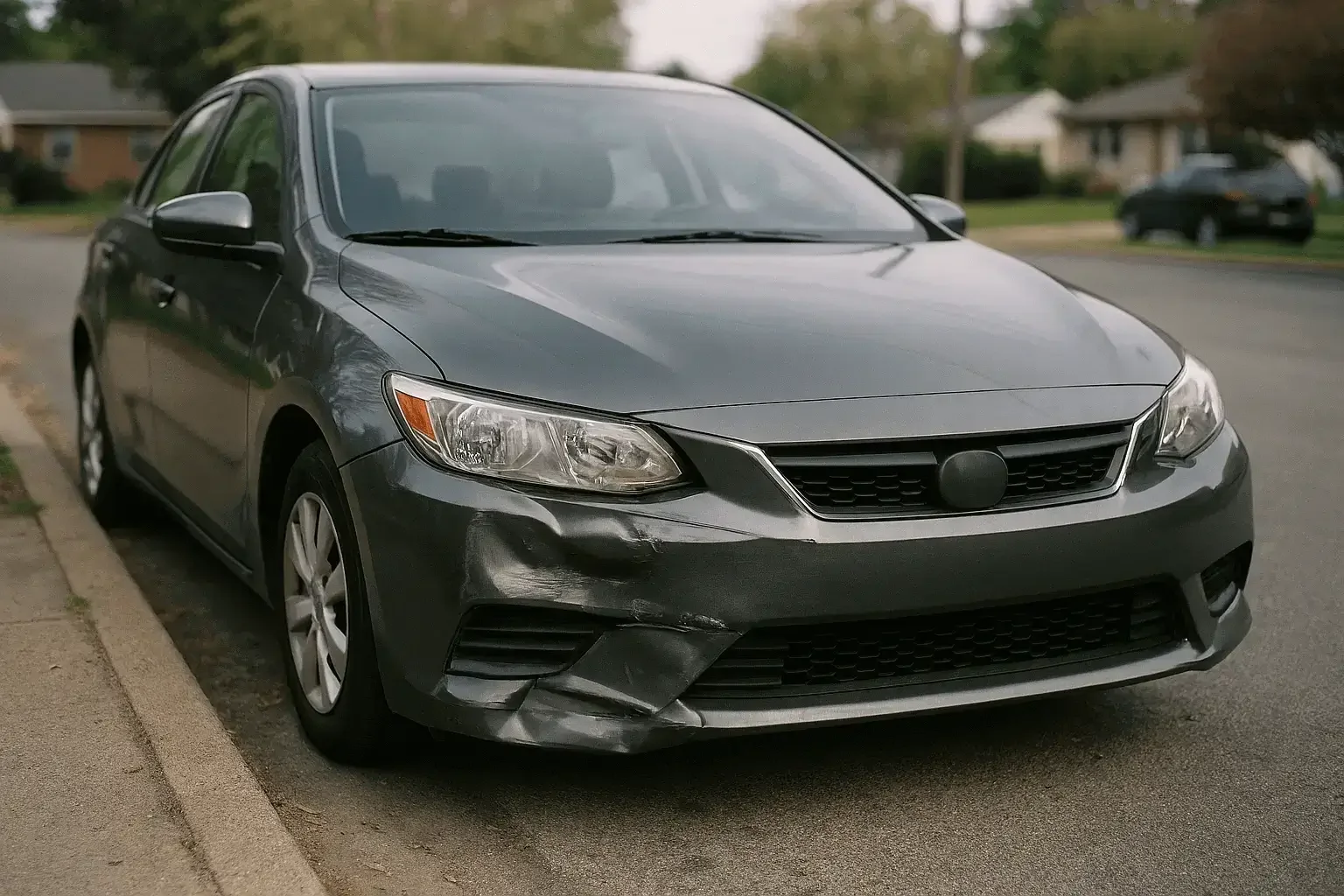
Real‑World Collision Claims That Are Commonly Denied
People often file collision claims expecting coverage, only to learn the loss falls outside what collision coverage is designed to handle. Below are real‑world scenarios explained plainly — followed by the industry reason coverage does not apply.
Coffee‑shop explanation: You didn’t hit another car, and the damage didn’t come from the impact itself. The engine failed after everything was already over.
Industry standard reason: Collision coverage applies only to direct physical damage caused by a collision event. Mechanical failure occurring after impact is excluded.
Coffee‑shop explanation: The pole wasn’t the real issue. The brakes failed first, and that’s what caused everything else.
Industry standard reason: Collision coverage does not apply when mechanical breakdown is the primary cause of loss, even if a collision follows.
Coffee‑shop explanation: It feels like a collision, but insurance treats animals differently than cars or objects.
Industry standard reason: Animal strikes are classified as non‑collision losses and fall under comprehensive coverage, not collision coverage.
Coffee‑shop explanation: The damage happened, but the person driving wasn’t allowed to be behind the wheel under the policy.
Industry standard reason: Collision coverage does not apply when the driver or vehicle use falls outside policy permissions or exclusions.
Coffee‑shop explanation: At a certain point, fixing the car costs more than replacing it.
Industry standard reason: Collision coverage settlements are limited by the vehicle’s actual cash value and do not exceed that amount.
Why these denials happen: Collision coverage is narrowly designed. It responds only to direct physical damage caused by a covered collision event, under defined policy conditions. These outcomes are structural, not discretionary.
Understanding Collision Coverage Within Auto Insurance
Collision coverage functions independently from liability coverage. It addresses physical damage to the insured vehicle only and does not determine fault, legal responsibility, or liability outcomes.
Collision coverage exists to resolve vehicle damage, not to allocate responsibility or address injury claims. Its role is limited to repair or settlement of the insured vehicle under defined policy terms.
Understanding collision coverage requires recognizing its boundaries, within auto insurance coverage, and how it fits within what is commonly referred to as full coverage. It is not designed to function as comprehensive protection and does not eliminate financial exposure outside the policy’s defined scope.