Tulsa Hit‑and‑Run Claim Exposure
Tulsa hit‑and‑run crashes create claim exposure when the at‑fault driver leaves the scene and cannot be identified. In these cases, recovery does not fail because fault is unclear, but because no responsible party or liability coverage is available at the moment recovery would otherwise attach.
This exposure is structural. It arises from the absence of an identifiable liability source at the time of loss, not from how clearly the collision can be documented.
Where Hit‑and‑Run Claims Commonly Break in Tulsa
These claim mechanics operate within Oklahoma’s auto insurance framework, which governs how liability coverage attaches when a responsible driver can be identified.
Hit‑and‑run claims in Tulsa break at the point where the at‑fault driver cannot be identified. Without an identifiable responsible party, liability coverage cannot be accessed — regardless of how clearly fault would otherwise be established.
This breakdown occurs before a traditional claim evaluation begins. In many cases, the loss never enters a standard liability process and instead becomes a coverage‑availability issue from the outset.
These failures are structural, not adversarial. They occur because no identifiable insurer exists to respond to the loss, not because responsibility, evidence, or damages are disputed.
Why Identification Determines Recovery in Hit‑and‑Run Claims
Insurance recovery is conditioned on the identification of a responsible party and their policy. In hit‑and‑run crashes, that identification fails, preventing liability coverage from attaching even when the collision itself is well documented.
This distinction governs hit‑and‑run outcomes and is frequently misunderstood. Police reports, witness statements, and visible damage may establish how a crash occurred, but they do not substitute for an identifiable insured party.
Insurance follows the driver, not the event. When the responsible driver cannot be identified, liability recovery does not proceed.
“Hit‑and‑run losses don’t fail because fault is unclear. They fail because the responsible party and their insurance never enter the claim.” — Micah Belyeu, Storms Anchor Insurance
Tulsa Crash Scenarios That Reveal Hit‑and‑Run Exposure
Certain crash scenarios in Tulsa consistently produce hit‑and‑run claim exposure by constraining driver identification at the moment liability would otherwise attach. Multi‑lane arterial collisions, nighttime impacts, and congested intersections increase the probability that an at‑fault driver can leave the scene before identification occurs.
Rear‑end collisions in dense traffic and side‑swipe incidents along high‑volume corridors present the same structural limitation. In these cases, collision mechanics may be straightforward, but recovery options constrict immediately once the responsible driver cannot be identified.
The exposure is not created by the collision itself. It is revealed by the absence of an identifiable liability source at the point recovery would otherwise begin.
Hit‑and‑Run Claim Outcome Examples — Tulsa
The scenarios below illustrate how hit‑and‑run claims typically resolve in Tulsa once the at‑fault driver cannot be identified. These outcomes reflect claim‑time mechanics, not fault determinations, legal conclusions, or coverage advice.
| Claim Condition | What Occurs at Claim Time | Why Recovery Fails |
|---|---|---|
| At‑Fault Driver Leaves the Scene | A collision occurs at an intersection or roadway, but the responsible driver departs before identification can be made. | Liability coverage cannot attach without an identifiable insured party. |
| Partial Identification Is Insufficient | A license plate or vehicle description is partially recorded but cannot be conclusively linked to a specific driver or policy. | Unconfirmed identification prevents liability recovery from forming. |
| Delayed Hit‑and‑Run Recognition | The loss initially proceeds as a standard collision until identification efforts fail later in the claim process. | Recovery assumptions shift once liability access collapses. |
| Damage Severity Does Not Alter Outcome | Significant vehicle damage or injury is present, but no responsible insurer can be identified. | Claim outcomes are governed by identification, not damage magnitude. |
What Actually Drives Hit‑and‑Run Claim Exposure in Tulsa
Tulsa’s hit‑and‑run claim exposure is a structural outcome, not a behavioral one. When driver identification fails, recovery options constrict immediately — frequently before damages are fully evaluated or documented.
This exposure reflects how claims function in the absence of an identifiable responsible party. It is not shaped by intent, conduct, or preventability, but by whether liability can attach at the moment recovery would otherwise begin.
“Hit‑and‑run exposure isn’t about how a crash happens. It’s about whether the responsible driver can be identified before recovery assumptions are formed.” — Micah Belyeu, Storms Anchor Insurance
“Once identification fails, liability coverage never attaches — and the claim’s outcome is shaped from that moment forward.” — Micah Belyeu, Storms Anchor Insurance
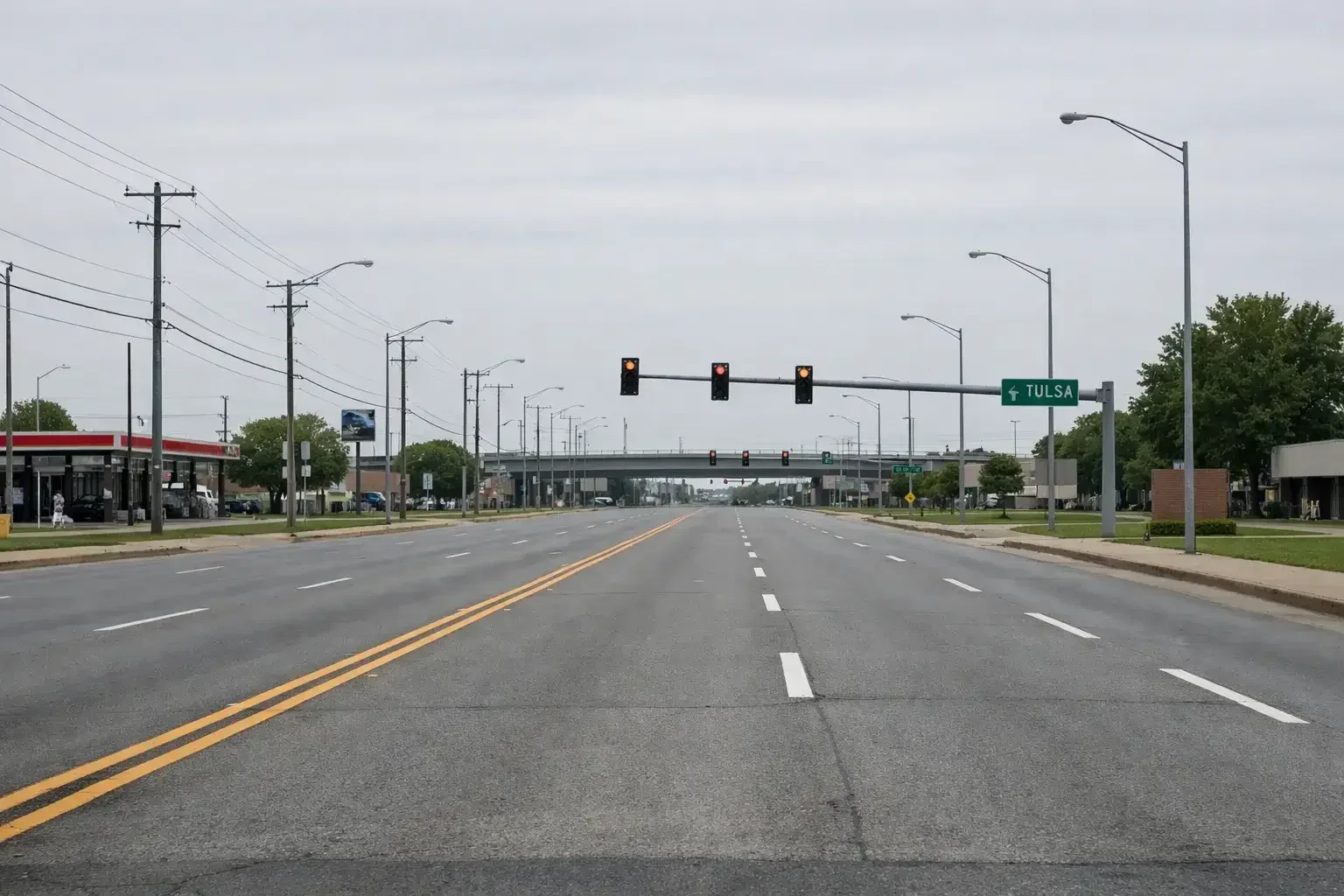
Tulsa‑Specific Factors That Increase Hit‑and‑Run Claim Exposure
Hit‑and‑run claim exposure in Tulsa arises from conditions that constrain driver identification at the moment liability would otherwise attach. Traffic density, roadway design, real‑time information limits, claim‑timing dynamics, and visibility conditions reduce the likelihood that a responsible driver can be identified before recovery pathways are established.
These factors do not influence fault or intent. They determine whether the responsible party ever enters the claim.
Traffic density and roadway design concentrate collisions in high‑volume, multi‑lane environments where identification windows are brief and easily lost. Multiple lanes, competing traffic flows, and rapid exit paths compress the opportunity to capture identifying details before the at‑fault driver leaves the scene.
Real‑time identification limitations reflect the reality that claims form at the moment of loss. Partial plate observations, incomplete vehicle descriptions, and unknown driver identities prevent liability recovery from attaching once the responsible party cannot be confirmed.
Claim‑timing dynamics allow some hit‑and‑run exposure to surface only after initial claim handling begins. When identification fails after recovery assumptions are already in motion, the claim’s financial trajectory shifts abruptly.
Low‑visibility conditions further reduce identification reliability. Diminished visual capture and evidentiary clarity increase the probability that responsible drivers never become part of the claim.
Together, these conditions explain why hit‑and‑run outcomes in Tulsa are driven by identification mechanics rather than crash behavior.
Oklahoma Hit‑and‑Run Claim Context
Oklahoma’s auto insurance framework conditions liability recovery on the identification of an at‑fault driver. When that identification fails, liability coverage does not attach — independent of damage severity, evidentiary strength, or fault clarity.
Hit‑and‑run outcomes are therefore determined at the identification stage of the claim. Once efforts to identify the responsible driver conclude and coverage availability is assessed, the financial outcome of the loss is effectively set.
“Hit‑and‑run losses aren’t defined by the crash itself. They’re defined by whether the responsible driver ever enters the claim.” — Micah Belyeu, Storms Anchor Insurance
Hit‑and‑Run Claim Outcomes in Practice
This page establishes how hit‑and‑run claims typically resolve in Tulsa when the at‑fault driver cannot be identified. These outcomes are shaped by identification failure, coverage availability, and claim structure — not by fault clarity or damage severity.
Identification determines recovery. When the responsible driver cannot be identified, liability coverage does not attach, regardless of how clearly responsibility would otherwise be established.
Hit‑and‑run outcomes emerge immediately. They are often determined at the moment identification fails, before damages are fully evaluated or recovery assumptions are formed.
These losses are structural. They result from the absence of an identifiable liability source, not from disputed responsibility, incomplete evidence, or crash severity.
For metro‑level context on how auto insurance exposure varies across Tulsa, see our Tulsa auto insurance overview</a>.
For a statewide explanation of how auto insurance coverage is defined and evaluated under Oklahoma insurance law, see our Oklahoma auto insurance overview.
For related risk factors that influence claim outcomes across the Tulsa region, see our Tulsa uninsured driver risk analysis and our Tulsa underinsured driver exposure</a> overview.
“Hit‑and‑run claims don’t fail because the crash is unclear. They fail because the responsible party never becomes part of the claim.” — Micah Belyeu, Storms Anchor Insurance
© Storms Anchor Insurance. All rights reserved. Privacy Policy | Terms of Use | Licensing & Disclosures